

Kathy is not waiting for the city to fix the pipeline.
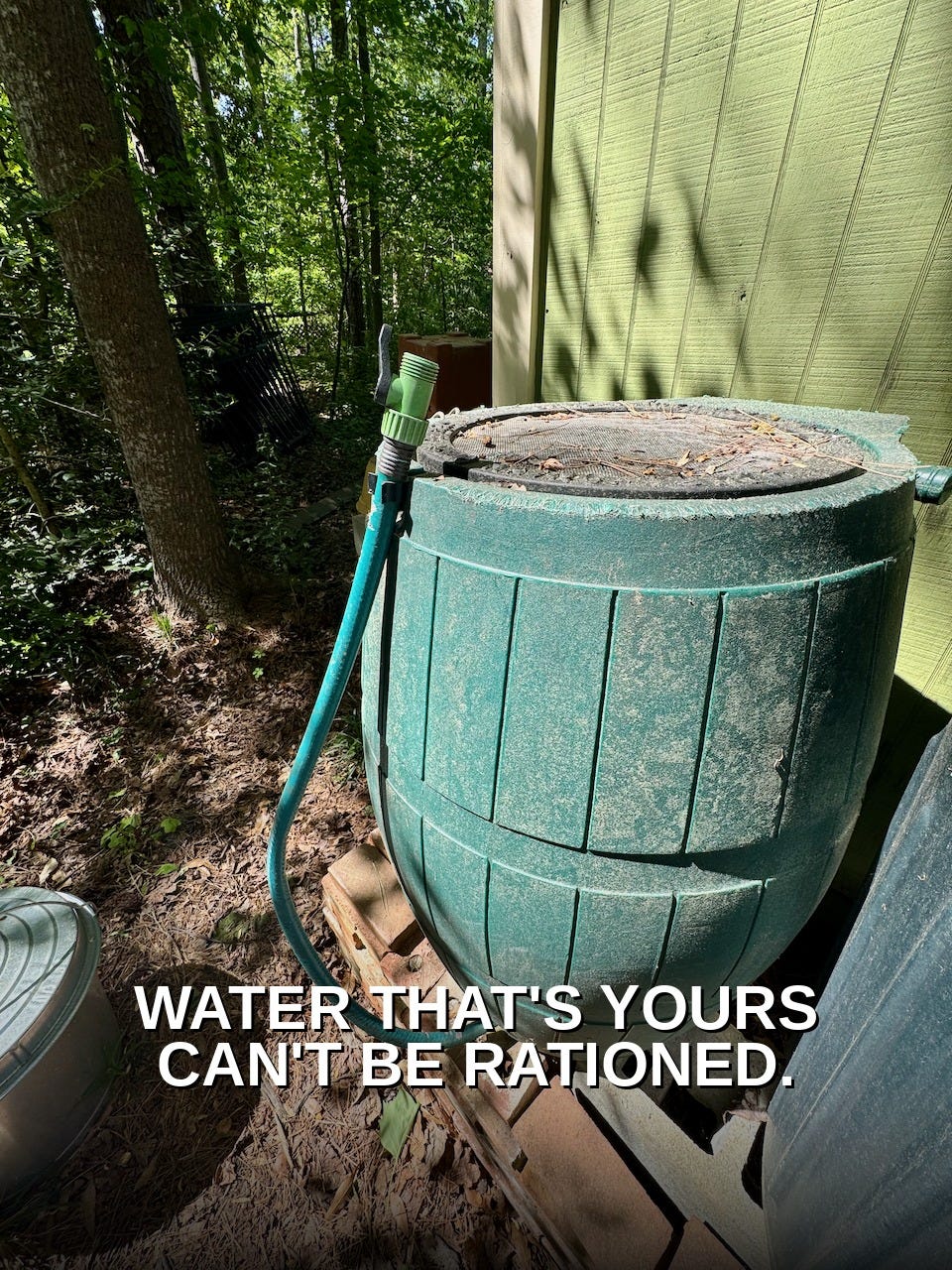
She lives in a rural area where the municipal water supply is unreliable enough that she started pricing rainwater catchment systems a couple of years ago. The full setup, tanks, filtration, the works, runs about $30,000. She hasn’t pulled the trigger yet, but she’s still pricing it. Still filling barrels in the meantime. “The rainwater is something that’s mine,” she says. “We need to put our foot down to say what water belongs to us.”
Kathy has figured out something most people take too long to learn: water that belongs to you cannot be rationed by someone else’s board.
That’s how most funeral homes have built their digital presence.
Your web presence lives on a platform someone else owns. Your leads come through a vendor’s subsidized rate that could change with the next contract cycle. The online planning tool, which may be the most important part of your preneed program, is a rented feature, and a mediocre one at that. Everything works fine right up until it doesn’t. Until the platform changes its terms. Until the subsidy disappears. Until the vendor decides your family’s data is a little too valuable to hand back cleanly. Or until you want to move or change the obituaries you own but don’t fully control.
Most funeral home owners don’t think about any of this until something breaks.
Parting Stone’s July 2026 research should keep you up at night in a useful way. 34.5% of families who receive cremated remains have not decided what to do with them. More than one in three. Only 7% say they lack information about their options. They know they could scatter, inter, place remains in a niche. They just haven’t moved. The struggle is emotional, and it peaks between six months and two years after the death. That’s the window. That’s when the question is live, the family is reachable, and the right contact from the right person can actually help.
They aren’t resisting resolution. They’re resisting being rushed, or reached at the wrong moment by someone who feels like a salesperson. The follow up system you build around an owned digital planner has to be designed around how people actually move in the world and how they relate to your funeral home. You’ve got to build something for the relationship rather than the transaction.
You cannot run that manually across every family you’ve served. It’s math. The volume is too large, the emotional timeline too long, the risk too high if the whole system lives on one person’s calendar and a spreadsheet nobody checks when things get busy. That’s an infrastructure problem. An owned planner & infrastructure, connected to a follow up system that runs all the time, is how you solve it. The families you served last year are still in that window. Some of them are living with a box on a shelf, waiting for someone to show up in a way that feels right.
The pipeline you depend on right now, the vendor relationships, the rented features, the subsidized leads, works until it doesn’t. The barrel in the yard fills whether or not the city’s infrastructure holds.
Kathy is still pricing the $30,000 water system. Still filling barrels, because in the meantime, she’s accepted that owning a small, reliable source beats depending on someone else’s pipeline, even if the owned version costs more upfront and nobody from the city shows up to thank her for building it or help her install it.
That’s the bet. And the families sitting in limbo, the ones who said they wished they had more people to talk to, they’re the uncaptured, unfiltered water.
-John